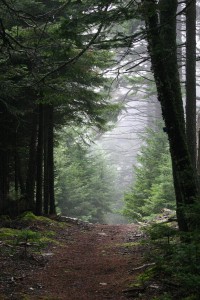
The largest community along the north shore of the Minas Basin, Parrsboro is an excellent place to witness the incredible power of the Fundy tides. These tides, the highest tides in the world, sculpt the coastline daily uncovering fossils, zeolites and many semi-precious stones. The deserted beaches, towering sea cliffs and miles of hiking trails will leave you in love with Parrsboro.
Popular activities in the Parrsboro Area include bird watching, hiking, fossil hunting, nature walks, rock hounding, and sea kayaking.
Population: 2,763
Major Attraction: Fundy Geological Museum
Community Links:
http://www.town.parrsboro.ns.ca/
http://museum.gov.ns.ca/fgm/
Cape Chignecto Provincial Park
Comprised of 600-foot towering cliffs, 18 kilometres of pristine coastline, steep ravines and old-growth forests, Cape Chignecto Provincial Park is found on the Western tip of the Avalon Eco-Zone along the Bay of Fundy. Not only is the park a great place to observe the tides, as they continuously lap at the base of the cliffs, Cape Chignecto is home to some of the province’s most significant geological deep valleys, fantastic hiking trails, rare plantlife, scenic views and rich cultural heritage.
Open mid-May through mid-November. Admission charged.
Fundy Geological Museum
At the Fundy Geological Museum discover the ancient world of dinosaurs that roamed the land millions of years ago. See some of the oldest dinosaur bones in Canada, the world’s first reptiles, ancestors of the frog, giant dragonflies and more. Next examine mineral treasures such as beautiful amethyst and agate gemstones, revealed by the washing of the giant Fundy Tides.
Admission charged.
Ottawa House
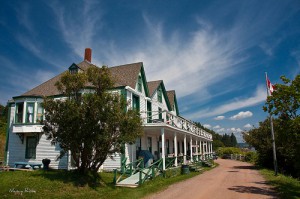
Set on the shores of the Minas Basin, just two miles from Parrsboro, Ottawa House By-the-Sea was once the summer home of Sir Charles Tupper, former prime minister of Canada and Father of Canadian Confederation. While visiting Parrsboro, stop at Ottawa House and wander through the furnished period rooms and view artifacts that depict Parrsboro’s seafaring, lumbering and social history.
Open daily June-September, 10am-6pm. Admission charged.
Five Islands Provincial Park
Mi’kmaq legend says that the native god Glooscap created these five islands – Moose, Diamond, Long, Egg and Pinnacle – when he threw chunks of sod at Beaver. Today the community of Five Islands hosts a provincial park, from which these islands are visible. A great spot for picnic, Five Islands Provincial Park is home to a beautiful beach, fantastic hiking trails and a non-operational lighthouse. Signs throughout the park provide visitors with information about the region’s geology and it is easy to spend the hours of low tide beach combing, clam digging and rock hounding. On a hot day be lured into the waters of the Minas Basin for a refreshing swim. Beautiful vistas are abundant throughout the park.
Sam
I was born in Parrsboro in the 60’s (have been in Alberta since the late 70’s oil boom though). I remember seeing this statue everyday while on the school bus (although I remember a full Chief’s headdress being on it, feathers and everything, but maybe that’s a rehashed memory?). I thought it was magnificent and powerful but also rather ugly in it’s construction (that’s weird looking skin, right?). It was conflicting, particularly because although I am not of Native ancestry, the native culture was very important to everyone in the community. Actually, now that I’m at it, there is a fascinating (and yet unverified) story about the ancestry of my Grandpa on my father’s side. As a child I was told that Grandpa was actually adopted by white folks as an infant because, like many other children, his biological parents were killed during the Halifax explosion, and they were Mik Mac. Maybe someday I’ll do DNA testing to find out for sure. I do recall that Grandpa’s face looked very Indian to me. Since my mother moved us to Alberta though, I’ve only been back home once, decades ago, when I saw my Grandpa for the last time. He was very old then, but those same facial feature were still there.
Perhaps then, in his honor, I’ll tell you a bit about how the locals lived (not in town). My father and his family have lived their entire lives (have no idea how many generations) in the Lower Five Islands area, mostly on small acreages that were scattered along the shores of a river contributory that empties into the Minas Basin. Here they lived and worked in tight-knit family and friend groups, much like agricultural farmers of the day, by digging clams and fishing (usually lobster) in the summer and drinking (and occasionally logging) in the winter months. I find the whole clam digging process so intriguing, and this is how my Dad’s family did it:
When the tide was all the way in (even if that was at 2 am, because the timing of the tide flow shifts a little each day, and being ready to go no matter what time it was determined if you fed your family that day or not), they would walk across their backyards, get into their small boats that were tied up along the river, follow it a short distance into the Minas Basin that would by then be filled with ocean water, go across the channel to Moose Island, set anchor, wait for the tide to go out and the boat to settle on the mudflat, then immediately, earnestly, and expertly dig clams for the few hours they had until the tide began to flood the flats again (also knowing exactly when the tide was coming in meant the difference between being swept away in the current, never to be seen again, or getting home alive and with your paycheck). Then they’d get back in the boat, wash their clam sacks (the old potato sacks) in the water as it rose up, wait for the water to settle fully around the island (again, the water channel between the island and the mainland is overwhelmingly strong given that this exact place is where the 2nd highest tides in the world are located, some say the highest tides in the world), then swiftly head back to the mainland (an hour’s trip or so, I recall), then immediately (because these were fresh, live clams) take their clam hauls to the little shop near the shore where they were inspected for size and quality, weighed, and then paid for in cash and “stamps” (not sure if they still do this but back in the day this was confirmation of earnings, like a paystub, and was needed in order to claim EI, or UI as we called it, during the winter months). From there, cash in hand as their only source of income, the general custom of the time was to first buy your beer (or whiskey on a good day’s haul) before giving up the rest to your wife to feed the kids with, which was never enough. Digging clams is one of the most strenuous forms of physical labor and it takes much experience, determination, and muscle mass to be able to dig enough clams in those few short hours when the tide is out and the mudflats exposed to make even a menial living (usually with many children, as was common then). It was a hard life but also a much beloved lifestyle and community that most locals wouldn’t give up for anything.
Anywho, that’s how life was back then and it hasn’t changed all that much today, outside of the fact that mature clam beds themselves have become so few and far between.I hope you enjoyed my recollection of my early childhood years in my ancestral North American home, living in the ways of the Minas Basin fishing villages. It is such a different lifestyle that most Canadians don’t know about. In fact, I remember that when we arrived in Alberta, even though we were white people of Scottish/English ancestry from a Canadian province, the kids at school treated us like aliens and outsiders! Our accents and words were different enough on their own to cause Alberta kids to be confused at first, but we figured it out and after all these decades living here, having spent the second half of my childhood as a bonafide cowgirl, I will likely never leave. There’s a small chance I’d consider retiring near my roots in Nova Scotia, but with so many people (who were not born there) buying up the land and every house on the market, that has become more of a pipe dream than anything else. But, if you travel to the shores of the Bay of Fundy, please respect ALL the people, don’t dig clams meant to feed families just for fun, spend your money at the little local shops and markets instead of big-box stores, don’t throw your garbage into the life-giving ocean, and enjoy the beauty of this very special place! Also be sure to see Glooscap in Parrsboro, ignoring the texture of his paper-mache skin – he was made in the 60’s, we didn’t have 3D printing!!
Lorne Johanson
Are Questions okay? I am interested in chartering a small boat either bare boat or with guide out of Parrsboro or West Bay. Please advise